Imagine you are standing in line at your favorite coffee shop. You order a caramel latte with extra vanilla pumps, thinking it’s just a midday treat to help you push through the afternoon slump. However, deep inside your body, your kidneys are sighing in exhaustion. While you might blame your fatigue or bloating on age or stress, your kidneys may be trying to send you a warning sign they have been signaling for years.
The reality is that sugar is a silent driver of kidney damage, and most people don’t realize there is a problem until it is almost too late. This article explores the biological transformation that occurs when you quit sugar for 30 days, from the initial “brain tantrum” to the long-term stabilization of your vital filtration system.

The Invisible Engine: How Your Kidneys Work
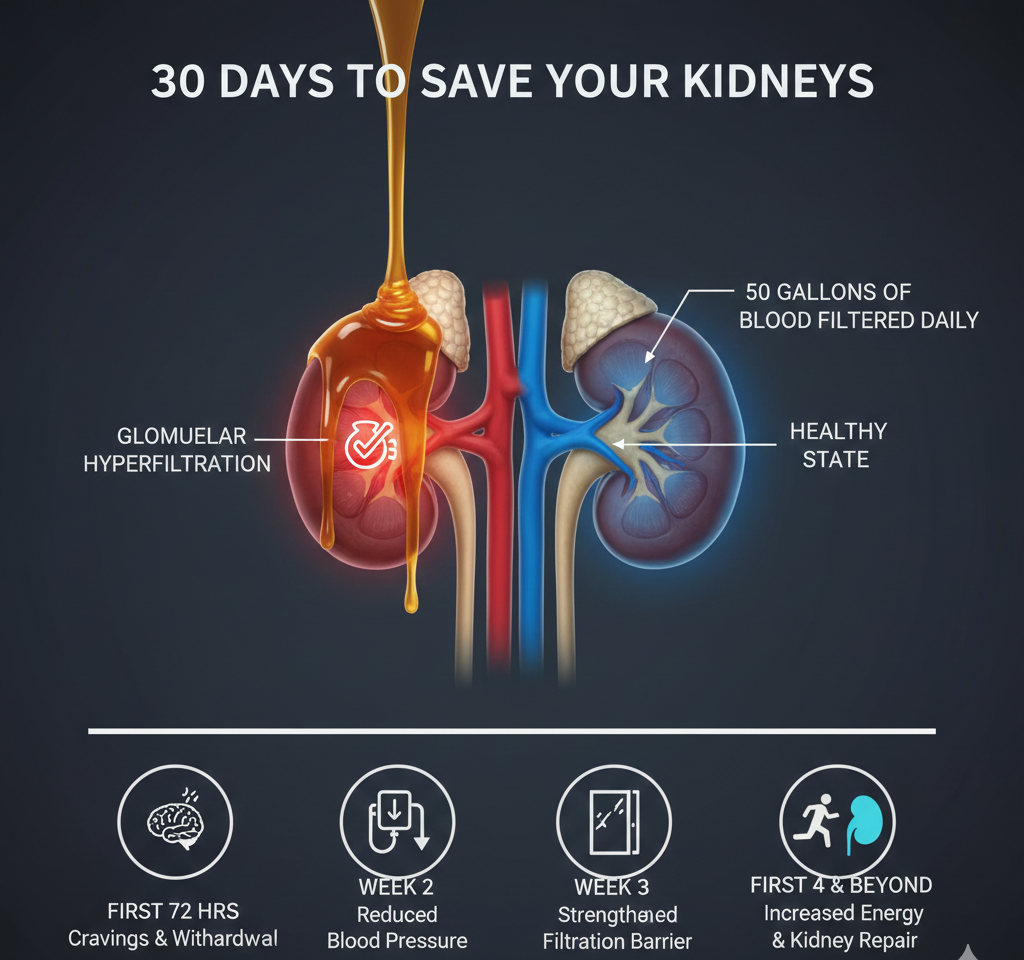
Your kidneys are two fist-sized organs that perform a Herculean task: filtering roughly 50 gallons of blood every single day. To put that in perspective, that is enough liquid to fill a bathtub constantly. This filtration process is managed by millions of microscopic filters called nephrons.
When your diet is high in added sugar, your kidneys are forced into a state called glomerular hyperfiltration. This is a technical way of saying your kidneys are running at maximum speed all day long. It is comparable to revving a car engine at the red line constantly; while it may work for a while, the parts will eventually wear out.
The Sticky Truth About Sugar Damage
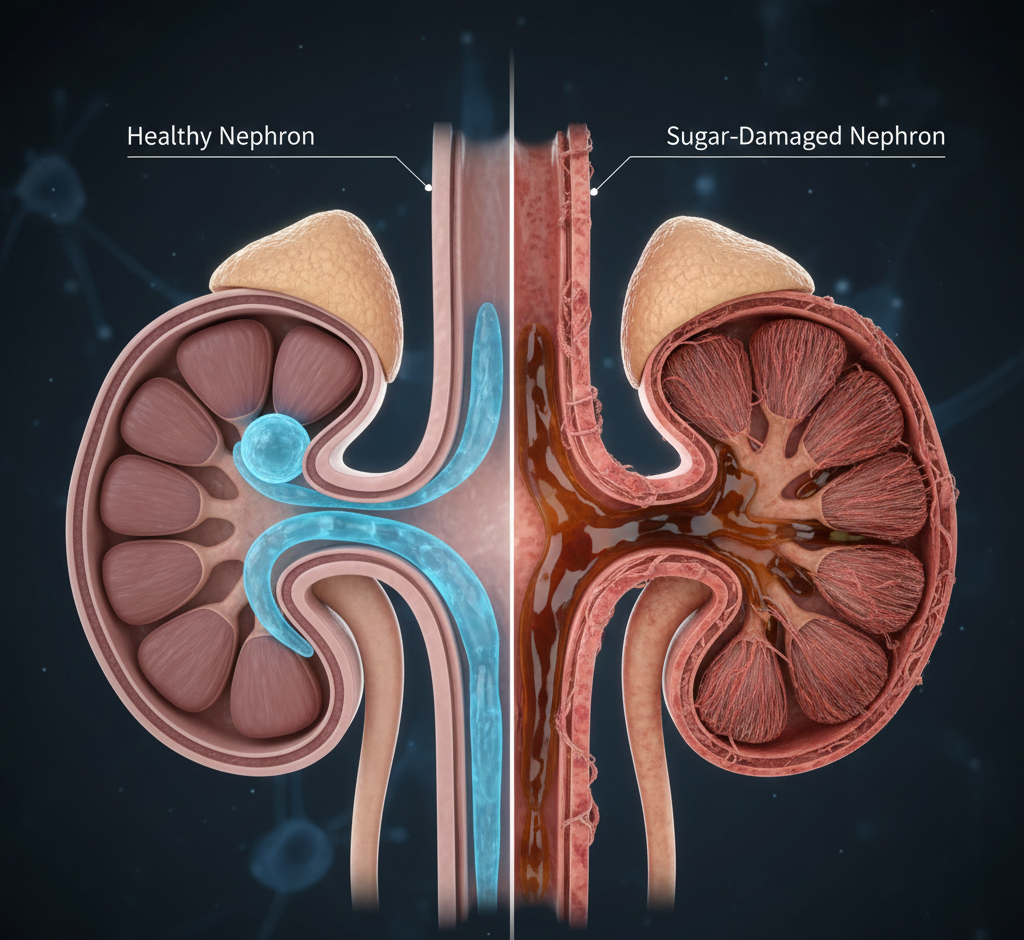
Sugar acts like a “sticky syrup” being poured through a delicate water filter. Over decades, this “syrup” causes the following damage:
- Nephron Loss: When sugar forces the filters into overdrive, they begin to die off. Critically, once nephrons are gone, they do not grow back.
- A.G.E.s (Advanced Glycation End Products): These are sticky molecules that literally age your kidneys faster. They attach to kidney tissues, causing inflammation and scarring.
- Protein Leakage: Healthy kidneys keep protein in your blood, but sugar damage creates “holes” in the filtration barrier – much like a damaged screen door – allowing protein to leak into your urine.
One of the most terrifying aspects of kidney decline is that it is often silent. You typically won’t feel anything wrong until approximately 70% of kidney function is already gone. By the time symptoms like swelling or chronic fatigue appear, the damage is often permanent.
The 30-Day Recovery Timeline
The First 72 Hours: The “Brain Tantrum”
The first three days are notoriously the hardest. Because the brain is often addicted to glucose spikes, cutting sugar triggers a withdrawal response. You may experience:
- Intense cravings.
- Headaches and mood swings.
- Irritability and fatigue similar to caffeine withdrawal.
While your brain is “throwing a tantrum,” your kidneys are quietly celebrating. The sudden drop in sugar immediately reduces the pressure on the filtration system. Even if you feel miserable, your internal organs are finally getting a much-needed break from the “overdrive” mode.
Week 2: Blood Pressure and Bloating
By the second week, the physiological benefits become more apparent. High sugar intake causes insulin to spike, which signals the kidneys to hold on to sodium and water. This leads to high blood pressure and physical swelling in the ankles or face.
When you quit sugar, this process reverses. Your kidneys stop retaining excess water, leading to measurable drops in blood pressure and a significant reduction in bloating.
Week 3: Strengthening the Filter
By the third week, the “screen door” of your kidneys begins to heal. Studies show that significantly cutting sugar can decrease protein leakage in the urine. This indicates that the filtration barrier is strengthening and the kidneys are actively repairing themselves.
Day 30: A New Biological Baseline
After 30 days, your body has achieved several “concrete biological improvements”:
- Lower Inflammation: Inflammatory markers like C-reactive protein fall, leading to less damage to blood vessels.
- Improved Urinary Composition: The risk of kidney stones—often triggered by sugar-induced calcium excretion—drops significantly.
- Insulin Sensitivity: Your body needs less insulin to handle glucose, which protects both your pancreas and your kidneys from future damage.
The Ultimate Stake: Avoiding Dialysis
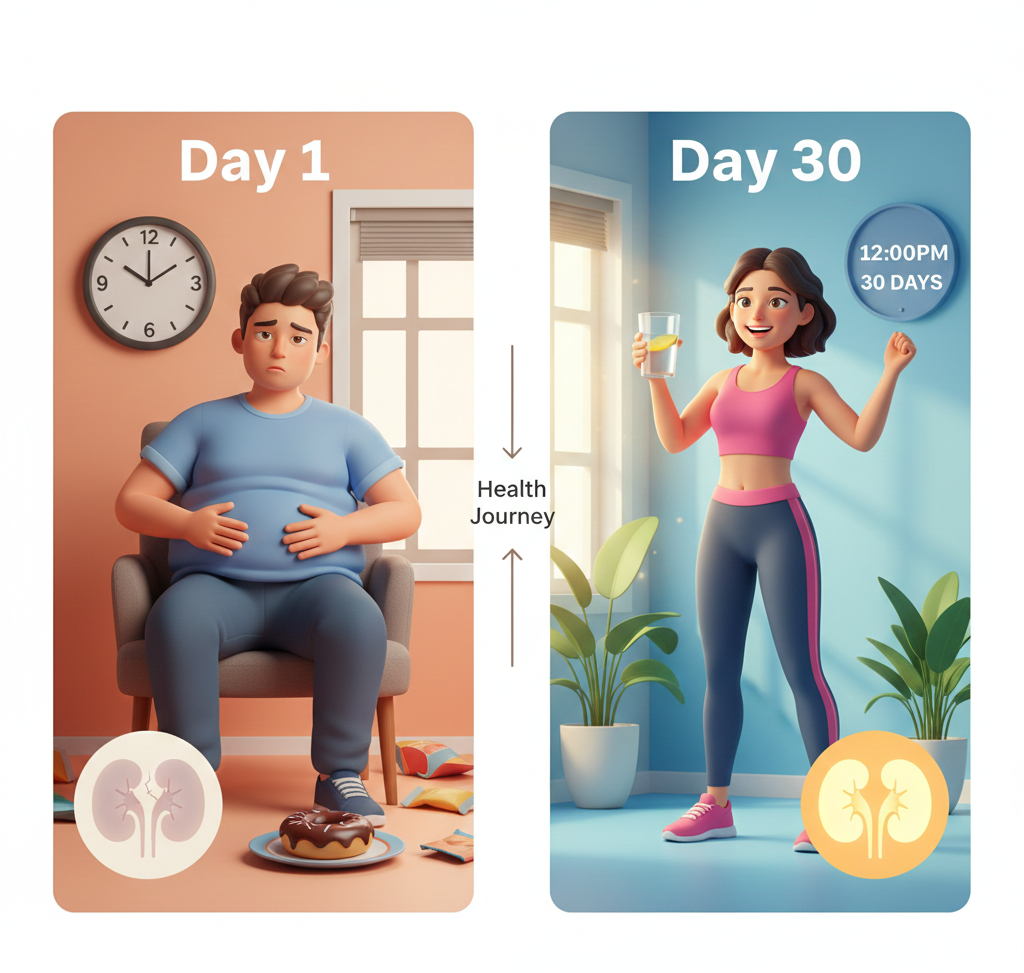
The long-term goal of quitting sugar isn’t just about “wellness”; it is about survival. Uncontrolled diabetes, fueled by high-sugar diets, is a leading cause of kidney failure worldwide.
When kidneys fail, the only options are a transplant or dialysis. Dialysis is a grueling process where you are hooked to a machine for four hours, three times a week, to do the work your kidneys can no longer do. The statistics are sobering: the 5-year survival rate after starting dialysis is only about 35%, which is lower than many types of cancer.
Conclusion: A Starting Point, Not a Finish Line
While 30 days is enough time to see significant improvements in blood pressure, inflammation, and filtration efficiency, it is only the beginning. These 30 days serve as a stabilization period.
The subtle but meaningful signs of healing—clearer urine, more stable energy, and reduced swelling—often convince people to make low-sugar eating a permanent lifestyle. Every day you choose to avoid added sugar is another day you are protecting yourself against a future on a dialysis machine.
The next time you are in that coffee shop line, ask yourself: If you could see your kidneys struggling in real-time, would you still order that sugary latte?.
Note on External Information: While the sources focus on the biological impact of sugar on the kidneys, general nutritional guidelines (which are not found in the sources) often suggest replacing sugary drinks with water or herbal teas and focusing on whole foods like vegetables and lean proteins to support this 30-day transition. Please consult a medical professional before making radical dietary changes if you have pre-existing health conditions.
Leave a Reply